

QUICK ANSWERS TO YOUR COMMON QUESTIONS
FAQs
The answers to your most frequently asked questions about ADAS calibrations, glass repair and more are here. Learn about topics such as when you should calibrate, and how to get paid more efficiently by insurers, and the benefits of working with Protech.
When is calibration necessary?
When does a vehicle require ADAS calibration?
Calibrations can be needed due to a fault code but most commonly, due to changes to the vehicle including/but not limited to, collision, vandalism, maintenance and any time vehicle components are removed and replaced, repaired or serviced. The OEM repair procedures determine when ADAS calibration is required, not the presence of a fault code.
Do I need to calibrate if the sensor itself wasn’t touched?
The impact applied to a vehicle in a collision or from major potholes and curbs can jolt sensors in a manner that requires a calibration in order to correct or validate the direction the sensor is aimed.
Isn’t clearing the codes enough?
No. Clearing a code just turns off a light. Calibration physically re-aligns the sensor to OEM specifications, which is a different (and required) step to return the vehicle back to safe driving conditions.
Can I tell a vehicle needs calibration from a scan or visual inspection?
No. A scan tool or visual inspection only exposes about 5–10% of needed calibrations. Protech’s ID³ closes the gap using proprietary algorithms and machine learning to provide OEM-aligned recommendations for the vehicle.
What’s the difference between static and dynamic calibration?
Static calibrations happen in the shop: the vehicle stays parked and the technician sets up manufacturer-specific targets at exact distances, using a level floor and controlled lighting.
Dynamic calibration happens on the road: the technician drives the vehicle at set speeds on well-marked roads so the sensors calibrate against real traffic and lane lines. Some vehicles need static, some need dynamic, and some need both. Refer to your OE specifications or leverage Protech’s ID³ to tell you which you need.
Space, equipment & doing it in-house
Do I have the right space to calibrate in-house?
Static calibration usually needs a clean, level, well-lit area — often around 30×50 feet of dedicated space. Many shops find out only after buying equipment that their bay doesn’t qualify.
Should I bring ADAS in-house or outsource it?
Outsourcing to a specialist can keep your bays generating higher margin collision revenue. If your calibration volume is very high, outsourcing is slowing you down, and you have at least 2 trained technicians or are considering training them, in-house can pay off if you are willing to invest in the OE tooling, software and targets (and keeping it updated) for each make that you service.
What does the equipment cost and what’s my break-even?
Tooling, targets, and software run into the tens of thousands, and OEM-specific tools add up fast in addition to yearly subscription fees. A single tablet for a luxury manufacturer can run around $40,000. Break-even depends on your monthly volume, which is exactly the math worth running before you commit.
Getting paid by insurers
Will insurance cover ADAS calibration?
Absolutely, when it’s tied to a covered event like a collision or glass claim and it’s properly documented as necessary. Coverage varies by carrier and policy but if OE recommendations specify a calibration, then insurers are required by law to return the vehicle to pre-accident condition.
Why do insurers push back, and how do I get approved?
Pushback is common. The fix is documentation, like Protech’s proprietary “WHY Report” which shows the specific OEM requirement, the itemization of the work, and explain why it was needed.
Do you handle the documentation insurers want?
Yes, that’s the WHY Report, which packages the OEM justification insurers need to approve payment. Adjusters ask for detail because calibration leaves no visual evidence — there’s no photo that proves it was done, or done right — and the claims file has to hold up to audit, re-inspection, and sometimes litigation. Without proof the operation was OEM-required and performed to spec, the safe default is to deny the line item. The WHY Report closes that gap: it cites the specific OEM procedure or position statement that triggered the calibration, itemizes which systems were calibrated and whether static or dynamic, documents the pre- and post-repair scans, and confirms each system passed to OEM specification with the date, technician, and equipment used. It arrives with the file instead of being assembled after a denial — which means fewer supplements and faster approval.
Liability
What’s my liability if a calibration is wrong, or missed?
If a safety system fails because of a missed or improper calibration, the shop can be held responsible for a resulting crash or injury. This can result in extensive legal fees and significant damage to your shop’s brand.
How do I know a calibration was done correctly?
Through documentation and a post-calibration scan. A complete calibration record should show the OEM procedure that was followed, the pre- and post-repair scan results, the specific systems calibrated, confirmation that each one passed to OEM specification, and the date, technician, and equipment used. Protech’s WHY Report packages all of this in one place. This matters because a mis-calibrated system often shows no warning light and drives normally — it only reveals itself when the driver needs it most. Without the paperwork, you have no way to prove the work was done to spec, and neither does the insurer or, if it comes to it, a court.
Why does a tiny misalignment matter?
Advanced driver assistance systems work in fractions of a degree. A forward camera off by just 0.6 degrees can sharply cut how fast automatic emergency braking reacts, which ultimately affects the safety of the driver and its passengers.
Working with Protech
Can you come to my shop?
Yes — we offer mobile, on-site calibration so vehicles don’t have to leave your shop or go to a dealer. If your shop has the appropriate size, lighting and a level floor, we can perform the work on-site and if not, we will take it to a nearby facility and return the vehicle when it’s done.
How fast can you turn a vehicle around?
Our footprint and technician depth mean we can typically service vehicles as soon as your team finishes the repair, keeping cycle time down. The key is scheduling, with the click of a button through our customer portal when you know the vehicle is going to be ready for calibration.
What makes you different from a cheaper independent or a remote-only competitor?
We do the work on-site to full OEM spec with genuine OE tooling, not remote phone guidance or code-clearing. With over 1,500 highly trained technicians across 45 states, we deliver the same quality and standards to every location you operate. Our proprietary ADAS ID³ intelligence uses OEM data, proprietary algorithms, and machine learning to surface calibrations a scan tool or visual inspection would miss so fewer calibrations slip past your shop and more legitimate revenue gets captured. Every job comes back with a WHY Report tying the work to the specific OEM requirement, itemizing what was performed, and documenting the pre- and post-repair scans, which is what insurers need to approve payment and what protects you if the repair is ever questioned.
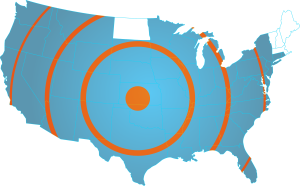
Coast-to-coast coverage backed by Protech’s certified network
Protech’s ADAS ID³ supports our nationwide network of 1500+ certified ADAS technicians, offering remote and mobile options to ensure consistent OEM-aligned expertise no matter where you operate.
Ready to standardize ADAS calibration in your shop?
ADAS ID³ gives your shop complete confidence in returning vehicles back on the road safely.
Faster vehicle turnaround
Consistent calibration quality
OEM‑aligned compliance
Nationwide scalability